What Non-Traditional Boudoir Actually Looks Like
Someone told you that boudoir was for a certain kind of body. Or a certain kind of relationship milestone. Or a certain kind of woman — one who already had it together, already felt good about herself, already looked the part before she walked through the door. That was a lie. Boudoir has always been about proximity to yourself, not proximity to an ideal. Sacred Authenticity — the practice of being witnessed exactly as you are, without editing — is not a reward for arriving somewhere. It is the whole point. Matthew D. Kauffmann has spent 25 years photographing people, and what that kind of experience actually teaches you is how to stop trying to make someone into something and start learning how to see what is already there.
A non-traditional boudoir photographer in the St. Louis area offers intimate portrait sessions that reject conventional beauty standards, staged poses, and the pressure to look a certain way before you’re “ready.” These sessions are designed for people who don’t fit the mold — different body types, gender identities, relationship structures, ages, and comfort levels with the camera. The goal is documentation, not correction. If you’re looking for a photographer who will shoot you as you actually are rather than a curated version of you, that is specifically what this kind of session is built to do.
Most people who come in for boudoir have spent years doing The Quiet Math — that internal calculation people do before deciding whether they are allowed to take up space. You run the numbers before every photograph someone else has ever taken of you. You angle your body. You pick the side. You hold your breath a little. You have been doing this so long you don’t even notice anymore, the same way you don’t notice how tightly you hold your shoulders until someone points it out. The math is exhausting. And it never balances.
Here is what the non-traditional approach actually changes: it dismantles the premise of the math. Traditional boudoir — the kind built around The Industrial Gaze, the cultural machinery that tells people their bodies are problems to be solved — operates on a correction model. Pose this way to hide that. Light from here to minimize there. The entire architecture of the session is built around the assumption that something is wrong with you and the photographer’s job is to manage it tastefully. The Witness works differently. The Witness — the photographer’s role — is to see without fixing, to record without judgment. Think of it less like a photo shoot and more like a well-lit conversation where no one is trying to make a point. The camera is not solving a problem. It is paying attention.
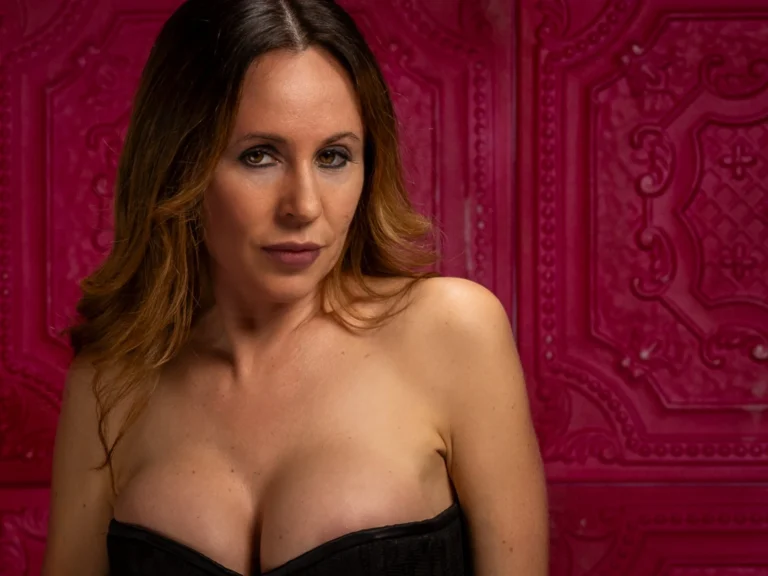
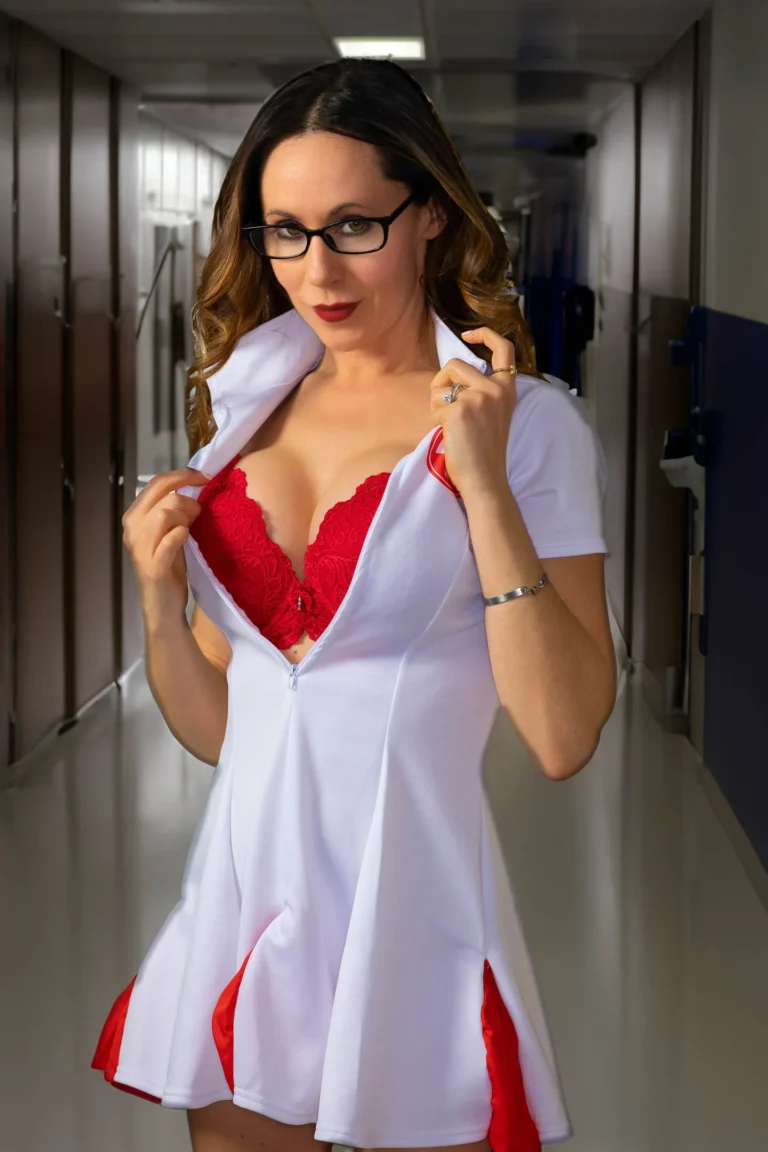
So what does this actually look like when you are the one standing in front of the lens? It starts before you get there. You show up with whatever you brought — the body you have today, the nervousness you cannot fully talk yourself out of, the outfit you second-guessed three times, the complicated relationship with the mirror you have been managing since middle school. None of that is a problem to be processed before the session can begin. Adsit — the act of simply sitting with someone in their reality without trying to fix or change them — is not a therapeutic technique here. It is a shooting philosophy. You do not have to arrive fixed. You do not have to pretend the discomfort is not there. The discomfort can be in the room. The discomfort has been in a lot of good photographs. What tends to happen, practically speaking, is that the first few frames are the ones where you are still performing — holding yourself the way you think you are supposed to, watching yourself be watched. And then something loosens. Not because anyone coached you into it, but because no one is asking you to be different than you are. For people who do not fit the conventional boudoir template — people who are larger, older, transmasculine, gender-nonconforming, heavily tattooed, disabled, or simply deeply suspicious of their own reflection — that loosening is not a small thing. It is often the first time a camera has ever just let you exist in front of it without an agenda. People who are trans, non-binary, or queer find that this approach matters in particular — most boudoir spaces were not designed with them in mind. Or HaGanuz, the hidden light, is a Hebrew concept — what the camera finds in people who have been told they are invisible. It shows up when nobody is trying to manufacture it.
mIsFiTs Like ME is in downtown Belleville, Illinois, which puts it squarely in the St. Louis metro area without putting it in the middle of everything you are trying to get away from for a few hours. If you have been quietly convinced that this kind of session was not built for someone like you, that is a reasonable conclusion to have reached — most boudoir marketing is not exactly subtle about who it imagines walking through the door. This studio imagines someone different. Someone who maybe never saw themselves in the brochure. Reaching out to ask a question, or to start a conversation about what a session might look like for you specifically, is not a commitment — it is just a question. You are allowed to ask it.
Frequently Asked Questions
What makes a boudoir photographer "non-traditional"?
A non-traditional boudoir photographer rejects the correction model — the idea that posing, lighting, and direction should hide or minimize parts of the subject — and instead photographs people as they actually are. Rather than working toward a standardized ideal of beauty, the goal is honest documentation of the person in front of the camera. This approach tends to be more accessible to people who have felt excluded from conventional boudoir, including those with larger bodies, disabilities, unconventional gender expressions, or simply a deep skepticism of how cameras have treated them in the past.
Do I have to be comfortable in front of a camera before I book a boudoir session?
No — you do not need to be comfortable in front of a camera before your session begins. Nervousness, self-consciousness, and a complicated history with how you look in photographs are not obstacles to a good session; they are just part of what you bring into the room. The non-traditional approach specifically does not require you to arrive already at ease, because the session itself is not built around performing confidence.
Is non-traditional boudoir photography in St. Louis right for plus-size or older people?
Yes — sessions at mIsFiTs Like ME are specifically designed for people who have felt excluded from conventional boudoir, including people with larger bodies, older people, and anyone who has been told by mainstream photography culture that they are not the right subject. The studio's approach does not use posing or lighting as correction tools, which means the session is not structured around minimizing or managing your body. If you have wondered whether boudoir photography is actually for someone who looks like you, this is worth looking into.
You found this page for a reason.
Maybe you're still deciding. Maybe you're ready and just haven't said it out loud yet. Either way, the first conversation is just that — a conversation. No pressure. No obligation. No one telling you what you should want.
Just an honest talk about what you're carrying, what you're ready to claim, and whether this studio is the right room for it.
Most clients say the hardest part was clicking that button.