Mature Women’s Boudoir Photography: There Is No Window
Someone told you a deadline exists. A specific age where your body stops being worth photographing and starts being something to apologize for. That’s a lie, and it’s a profitable one for a lot of industries that need you insecure enough to keep buying. Twenty five years behind a camera teaches you the opposite: the women who show up with the most to say with their bodies are rarely the twenty two year olds. They’re the ones who’ve lived in the thing long enough to stop flinching at it. Sacred Authenticity, the practice of being witnessed exactly as you are without editing, doesn’t have an age floor or ceiling. It just has a door, and you either walk through it or you don’t.
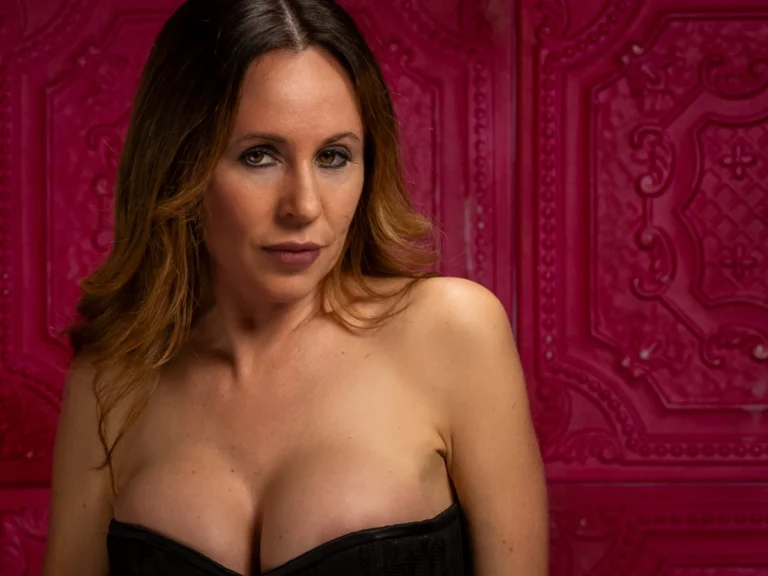
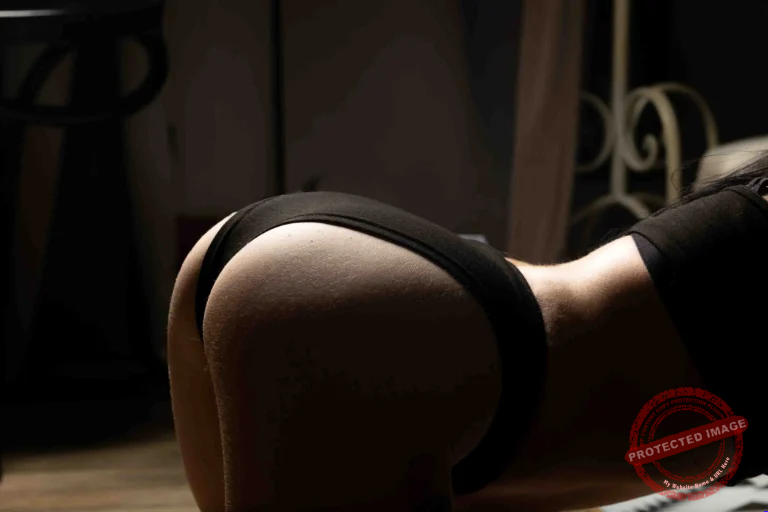
Mature women’s boudoir photography is a session built around a woman in her 40s, 50s, 60s, or beyond who wants to be photographed as she actually looks now, not as some airbrushed memory of twenty years ago. A skilled photographer lights for the body in front of them, not against it, and treats changes like softness, scars, and stretch marks as texture to work with rather than flaws to erase.
You’re standing in front of a mirror adjusting the same shirt for the fourth time. Not because it looks bad. Because you’re doing math. How much of your arm shows. Whether the light in this bathroom is kinder than the light at the restaurant. You know this math. You’ve done it since your twenties, except now there’s a new variable thrown in: a stranger’s voice in your head reminding you that you’re “not twenty five anymore,” as if that were an argument.
Nobody warns you how loud that gets.
It sits under everything. The way you angle yourself in photos your kids take. The way you decline the pool invite. The way you’ve started saying “I used to look good” in past tense, like your body retired from something and you’re just managing the pension now. This isn’t vanity. It’s a constant, exhausting negotiation with a version of yourself you’ve been told is the only acceptable one, and that version keeps getting younger in your memory while you don’t.
That negotiation has a name. The Industrial Gaze is the cultural machinery that tells people their bodies are problems to be solved, and it does not retire when you do. If anything it gets louder with age, because now it’s selling you creams and procedures and apology instead of just insecurity. Every time you hesitate before stepping into frame, you’re running The Quiet Math, the internal calculation of whether you’re allowed to take up space. For a lot of women over 40, that calculation has been running so long it feels like personality instead of conditioning.
Here’s the reframe: a camera doesn’t care about your deadline. A camera, in the hands of someone doing this work right, functions as The Witness. Not a judge. Not an editor. Something closer to a mirror that doesn’t lie and doesn’t flinch either. Think of it like a good scale, the old mechanical kind, not digital: it just tells you what’s there. No opinion attached. The Witness records the body you actually have, in the light you’re actually standing in, and that recording tends to look a lot less alarming than the one running in your head. Or HaGanuz, the hidden light, is what shows up in people who’ve spent years believing they’d already aged out of being seen. It was never about losing something. It was about nobody pointing a lens at it long enough to notice it was still there.
Let’s get specific. If you’re a woman in your 40s, 50s, or beyond considering this, here’s what the actual process looks like, not the Pinterest fantasy version.
You come in with concerns. Say them out loud. Your photographer should want to hear them, not talk you out of having them. This is Adsit: someone sitting with you in the reality of your body right now, not rushing to reassure you it’s fine, not trying to fix what you walked in worried about. Just staying in the room with it until it stops being the only thing you can see.
Wardrobe matters more at this stage, not less. A good robe, a well-fitted set of lingerie, a tailored piece you feel structured in rather than exposed by, these aren’t costumes to hide behind. They’re tools. A fitted jacket or structured piece can do for a session what a well-cut suit does in daily life: it holds you, gives you a line to move inside, lets you forget you’re wearing anything within ten minutes.
Posing for a 55 year old body is different work than posing for a 25 year old one, and any photographer worth your time knows that going in. Weight gets distributed differently. Joints move differently. If you have arthritis, a hip replacement, limited mobility, chronic pain, or any physical consideration that makes certain positions impossible, say so before the camera comes out. A boudoir photographer who accommodates disabilities and mobility differences isn’t doing you a favor. That’s just competent work. Poses get built around what your body does well, not forced into a shape built for someone else’s joints.
Lighting should be soft and directional, not flat and clinical. Flat light shows everything equally and flatters nothing. Directional light sculpts. It’s the difference between a mugshot and a painting, and it’s a choice the photographer makes, not something you have to engineer by sucking in your stomach.
You don’t need to lose weight first. You don’t need to “get back” to anything. You need a date on the calendar and someone behind the camera who’s actually done this work, repeatedly, with bodies like yours.
Matthew D Kauffmann is a Certified Professional Photographer, a credential that means something specific: he was tested on this, not just trusted on vibes. Twenty five years of sessions have gone through that studio in downtown Belleville, and a good number of them belonged to women who walked in convinced they’d missed their window. There is no window. There’s a door in Belleville, a short drive from St. Louis, and it opens the same way for a woman at 60 as it does at 30.
If you’ve been searching for a St. Louis boudoir photographer who won’t treat your age like a disclaimer, who’ll ask about mobility instead of assuming, who understands that a body that’s raised kids or survived a surgery or just lived four extra decades has more to say in a photograph, not less, this is that kind of studio. Imago Dei means every person carries something worth seeing, no expiration printed on it anywhere.
Nobody’s handing you permission for this one. You’re allowed to just take it.
Frequently Asked Questions
Is there an age limit for boudoir photography?
No, there is no age limit for boudoir photography. Women in their 40s, 50s, 60s, and beyond regularly have sessions, and an experienced photographer knows how to light and pose for the body in front of them rather than the body from decades ago.
What should a woman over 40 wear for a boudoir session?
A woman over 40 should wear pieces that feel structured and supportive rather than exposing, like a well-fitted robe, tailored lingerie, or a fitted jacket. These act as tools that hold the body and give it a line to move inside, not costumes to hide behind.
Can boudoir photography work with mobility issues or arthritis?
Yes, boudoir photography can absolutely accommodate arthritis, limited mobility, chronic pain, or other physical considerations. A competent photographer asks about these concerns before the camera comes out and builds poses around what the body does well instead of forcing a shape that does not fit.
Do I need to lose weight before a boudoir shoot?
No, you do not need to lose weight or get back to any previous version of yourself before a boudoir shoot. What actually matters is scheduling a date and working with a photographer who has real experience photographing bodies at every stage of life.
You found this page for a reason.
Maybe you're still deciding. Maybe you're ready and just haven't said it out loud yet. Either way, the first conversation is just that — a conversation. No pressure. No obligation. No one telling you what you should want.
Just an honest talk about what you're carrying, what you're ready to claim, and whether this studio is the right room for it.
Most clients say the hardest part was clicking that button.