Boudoir Photography When Your Body Needs to Rest
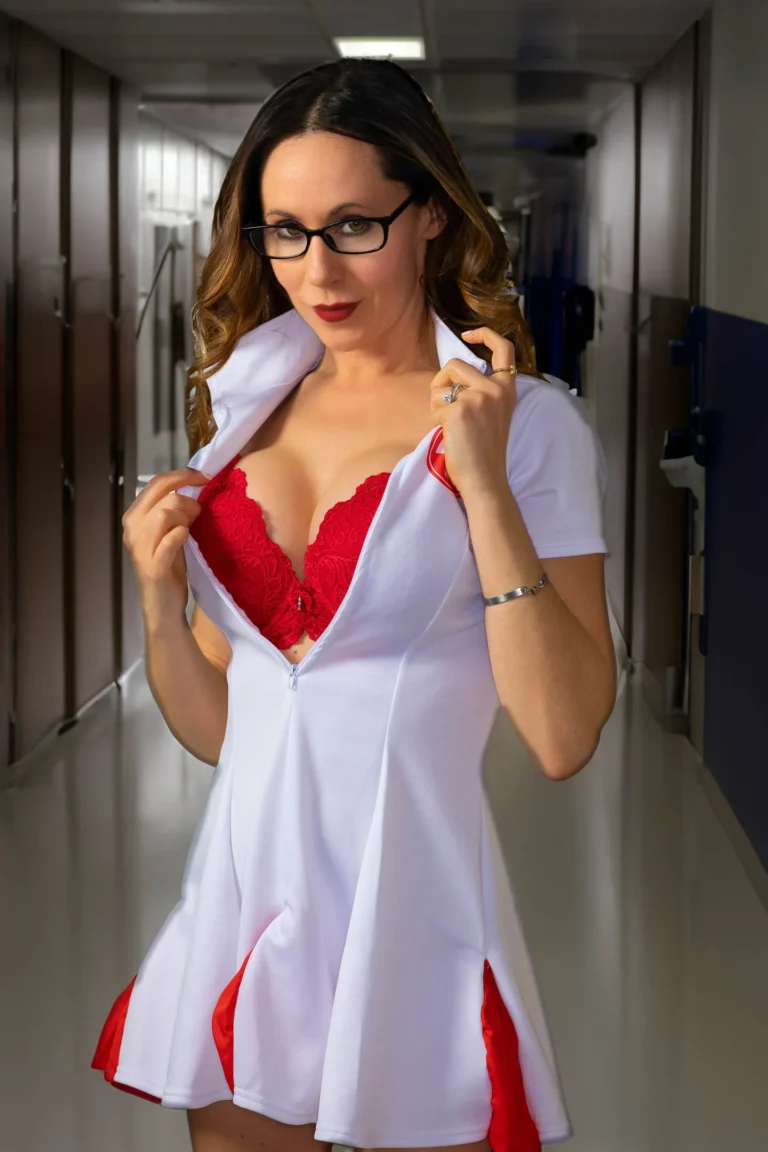
Someone told you that a photoshoot means standing. Standing in heels, standing against a wall, standing at the edge of a bed while the light hits you just right. Someone told you — not with words, maybe, but with the silence of never seeing yourself represented anywhere — that if your body doesn’t cooperate with that particular version of the process, then the process isn’t for you. That’s a lie. What you actually need is Sacred Authenticity, the practice of being witnessed exactly as you are, without editing — which means your body, your reality, your limits, photographed as they actually exist, not as the industry wishes they would. Matthew D. Kauffmann has spent 25 years and a CPP certification learning how to find the image that’s already there, not the one that requires you to perform something your body can’t sustain.
Boudoir photography for women who cannot stand for long periods is not only possible — it is often more intimate and visually compelling than a standard session. Most boudoir work is already done on beds, chaises, draped furniture, or floors. A photographer who knows what they are doing can shoot an entire session without ever asking you to stand at all. Chronic illness, pain conditions, mobility limitations, and fatigue do not disqualify you from boudoir photography. They require a photographer who plans, adapts, and frames with intention — and they tend to produce images with a stillness and depth that standing poses rarely achieve.
Here is what happens when you live in a body with limits: you start doing The Quiet Math before you even make a phone call. Will I have to explain myself? Will they tell me it’s fine and then make it awkward? Will I spend the whole session apologizing for needing to sit down? The math is exhausting. It runs constantly. And at some point, you stop making the phone call altogether — not because you don’t want the photos, but because the cost of hoping and being disappointed feels higher than just opting out. You’ve gotten good at opting out. It keeps you safe in the small, practical sense. It also keeps you invisible. Those two things are not the same, even when it feels like they are.
The reframe isn’t that your limitations don’t matter — it’s that they were never the obstacle someone implied they were. Think of a portrait painter. A painter doesn’t ask their subject to hold a pose that causes pain. They work around the subject. They adjust the composition to what is real. That’s not accommodation. That’s craft. The Witness — the photographer’s role, to see without fixing, to record without judgment — functions the same way. A skilled photographer doesn’t look at a woman lying across a chaise and see a problem. They see a composition. They see light falling across a shoulder. They see the particular way a resting body holds tension and releases it. The Industrial Gaze, the cultural machinery that tells people their bodies are problems to be solved, has convinced you that your need to rest is a flaw in your body. It is not. It is a fact about your body, and facts are what photography works with.
Here’s what a real session looks like when it’s built around you. You come in, and before anything else, you talk. Not a checklist — a conversation. Where does your body feel most like itself? What positions are comfortable for longer than five minutes? Do you need to shift every few minutes, or do you find a good spot and want to stay there? A photographer who has actually done this work knows that nervousness shows up on both sides of the camera — it’s not just you who feels it — which means a good one is going to be paying attention to you, not rushing through a shot list. You might spend most of your session on the bed. You might be propped against pillows, or curled on your side, or lying flat with your face turned toward the light. Adsit — the act of sitting with someone in their reality without trying to fix or change them — is what this looks like in practice: your photographer isn’t trying to get you to look like the images on the mood board. They’re trying to find the image that’s actually in the room. The difference is enormous. You’re not working toward something. You’re already there. The camera is just paying attention. Practically speaking, this also means you can communicate in real time. If something stops working, you say so. A good session has that kind of flexibility built in — not as a special exception for you, but as the basic operating procedure for everyone.
There is a concept in Hebrew tradition called Or HaGanuz — the hidden light, what the camera finds in people who have been told they are invisible. You have been told, in one way or another, that boudoir photography is not for a body like yours. That the genre belongs to women who can stand in four-inch heels for three hours without their nervous system staging a protest. That admission requires a certain physical baseline you don’t meet. That belief is Or HaGanuz in reverse — it’s hidden light being kept hidden on purpose. What actually happens when someone finally photographs a woman with chronic pain or fatigue or limited mobility, photographed honestly, without apology, in the positions her body actually lives in — is that something comes through the image that doesn’t show up in the standing-in-heels version. A realness. A weight. The theological concept Imago Dei holds that every person bears the image of the divine — and that includes the person whose body requires rest, whose muscles have their own schedule, whose session needs to be built differently. The camera doesn’t know about your diagnosis. It sees you.
mIsFiTs Like ME is a boudoir and erotic art studio in downtown Belleville, IL — in the St. Louis metro area — and the kind of session described in this article is not a special accommodation you have to request with a paragraph of explanation. It is the baseline approach for a studio that doesn’t assume everyone arrives with the same body. If you’ve been doing The Quiet Math every time you’ve almost made a phone call about boudoir photography, you can stop running the numbers. You don’t owe anyone a medical history before your session begins. You don’t have to perform stamina you don’t have. You’re allowed to come exactly as you are — resting, hurting, limited, real — and find out what the camera sees when it’s paying actual attention to you. That’s not a consolation prize. That’s the whole point.
Frequently Asked Questions
Can you do boudoir photography if you have chronic pain or can't stand for long?
Yes — boudoir photography is entirely possible when you can't stand for long periods, because most of the work happens on beds, chaises, and floors anyway. A photographer who plans sessions around real bodies can shoot a complete, compelling session without ever asking you to stand. Chronic pain or fatigue changes the logistics, not the outcome.
What boudoir poses work for someone with a mobility limitation or chronic illness?
Lying, reclining, curled, and propped positions are standard boudoir poses that work well for women with mobility limitations — they're not workarounds, they're some of the most visually intimate options in the genre. A photographer experienced with adaptive sessions will work with you before shooting to find which positions feel sustainable for your body. The conversation about what's comfortable happens before anything is photographed.
Do I have to explain my disability or medical condition before booking a boudoir session?
No — you don't owe a photographer your medical history before booking or before your session begins. What matters is a general conversation about which positions feel comfortable and how much movement or rest your body needs during the shoot. A studio that approaches every session adaptively won't ask you to justify your body's needs before they agree to work with you.
You found this page for a reason.
Maybe you're still deciding. Maybe you're ready and just haven't said it out loud yet. Either way, the first conversation is just that — a conversation. No pressure. No obligation. No one telling you what you should want.
Just an honest talk about what you're carrying, what you're ready to claim, and whether this studio is the right room for it.
Most clients say the hardest part was clicking that button.