Rock and Roll Boudoir Photography: Finally, a Camera That Gets It
You were told that wanting to be seen — really seen, leather and eyeliner and all of it, the version of you that turns up the volume instead of apologizing for it — was vanity. Or a phase. Or something you were supposed to have grown out of by now. The version of you that lives in the music, in the back of the venue, in the moment right before the lights go down — that version has been told to wait in the car. Sacred Authenticity is the practice of being witnessed exactly as you are, without editing, and for a lot of people who came of age with a guitar pick in their pocket and a poster of someone dangerous on their bedroom wall, that practice has never once been offered to them. Matthew D. Kauffmann has spent 25 years in photography, and what he has learned is that the people most desperate to be seen are often the ones who learned earliest to make themselves smaller.
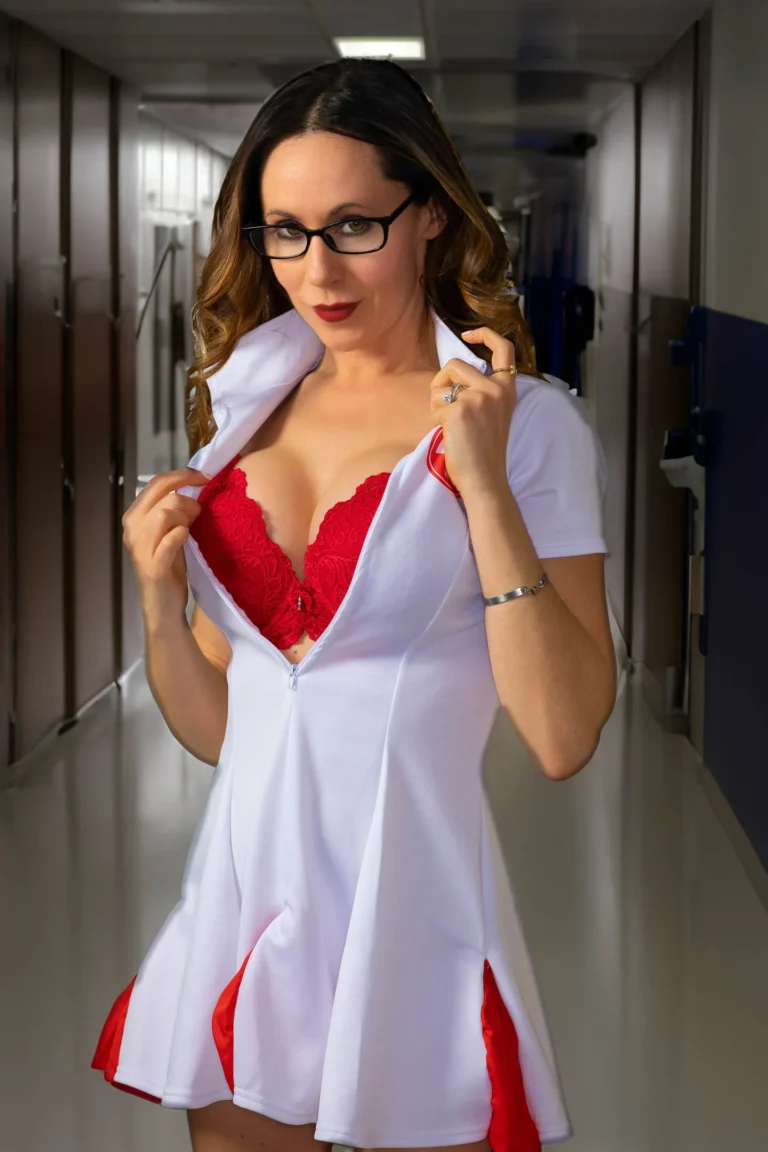
Rock and roll boudoir photography combines the intimacy of boudoir portraiture with the visual language of classic rock imagery — leather, attitude, dramatic lighting, edge — to create photographs that reflect who a person actually is rather than who they were told to be. It works for anyone who has a relationship with music, with rebellion, with the part of themselves that never fully got permission to exist in front of a camera. Sessions take place in a studio setting where the aesthetic is built around the subject’s personal style, not a generic idea of “sexy.” The result is a set of images that feel like a record cover for a life that finally got to be told the right way.
Here is what it feels like to keep that version of yourself locked in the back room. You style yourself down before you leave the house — not all the way, just enough to avoid the comments. You know the look. The slight pause when someone clocks your aesthetic and recalibrates their opinion of you in real time. You have learned to do something quietly devastating: you perform a version of yourself that is easier for other people to receive. It doesn’t hurt exactly. It just costs. Every single day it costs something small, and small costs compound. The music still knows who you are. Your mirror sometimes gets a glimpse. But a photograph? A photograph taken by someone who was expecting you, who set up the lights for the real you before you walked through the door? That has probably felt like something that happens to other people.
Here is the reframe. The person who has spent years code-switching their aesthetic — filing down the edges in professional settings, saving the real outfit for concerts where strangers won’t remember them — is not someone with a style problem. They are someone who has been operating under The Industrial Gaze long enough that they have started mistaking its verdict for reality. The Industrial Gaze is the cultural machinery that tells people their bodies are problems to be solved, their desires are too much, their specific brand of beautiful doesn’t have a market. Rock and roll, at its actual root, was always a rejection of that machinery. It was always people who were told they were wrong deciding to be loud about it anyway. Think of it like an overdriven amp: the distortion isn’t a defect. It’s the whole sound. The Witness — the photographer’s role, to see without fixing, to record without judgment — exists to point the camera at the overdriven version and say, yes, that one, hold that.
So imagine you. You show up with a bag full of things you have never worn in a photograph. Maybe it’s a corset you bought three years ago and haven’t justified yet. Maybe it’s a jacket with patches on it that tell the whole story of who you actually are. Maybe it’s just the eyeliner you only wear when you are not trying to be professionally palatable. You sit down with Matthew before anything is shot, and what happens in that conversation is something that has a name: Adsit — the act of simply sitting with someone in their reality without trying to fix or change them. No suggestions about angles that are more flattering. No gentle steerings toward a softer version of the look. He is not here to produce a version of you that other people will find easier. He sets the lights for drama because drama is honest. He understands the difference between a photograph that makes someone look good and a photograph that makes someone look like themselves, and he knows that for certain people, those two things have almost never been the same image. You put on the jacket. The camera gets introduced to a person it has been waiting to meet. The first frame lands and something shifts — not because you suddenly believe you are beautiful in the conventional sense, but because the conventional sense was never the point. The point was always the hidden thing. The thing that only comes out when the stakes feel real.
What the camera finds in people who have spent decades being told their version of themselves is too much is something the Hebrew tradition calls Or HaGanuz — the hidden light, present in people who have been treated as invisible. It does not require coaxing. It requires a room where the conditions are finally right. The Quiet Math — the internal calculation people do before deciding whether they are allowed to take up space — runs in a loop for most people walking into any kind of portrait session. In a rock and roll boudoir session, the math changes. You are not trying to qualify. You already qualified. You qualified the moment you stopped apologizing for knowing every word to a song that most people in your life have never heard. There is also a concept embedded in this work that does not get named often enough: Imago Dei — the theological idea that every person bears the image of the divine. Your particular version of that image happens to include a preference for minor keys and a healthy distrust of anything too polished. That is not a problem. That is the frame.
mIsFiTs Like ME is in downtown Belleville, Illinois, which puts it squarely in the St. Louis metro area and accessible to people across the region who have been quietly looking for something that didn’t ask them to sand themselves down first. If you have been mentally filing rock and roll boudoir photography under “things I would do if I were braver” or “things I would do if I actually looked the part” — the second one in particular is a lie The Industrial Gaze sold you, and you should know it — this is the room that was built with your specific kind of person in mind. Reach out to the studio and start a conversation about what a session could look like for you. You don’t have to have it all figured out. You don’t have to show up with a polished vision. You just have to show up.
Frequently Asked Questions
What is rock and roll boudoir photography?
Rock and roll boudoir photography is a portrait style that combines the intimacy of boudoir with the visual language of rock — leather, dramatic lighting, attitude, and edge — to create images that reflect your actual aesthetic rather than a softened version of it. It's built for people who have a relationship with music, rebellion, or a personal style they've never fully been allowed to bring in front of a camera. The session is styled around you, not a generic idea of what a boudoir photo is supposed to look like.
Do I have to have a certain body type or look to do a rock and roll boudoir session?
No — rock and roll boudoir photography is not built around a specific body type, age, or level of conventional attractiveness. The entire premise is that the camera should meet the real version of you, not a curated or filtered one. If you've spent years feeling like portrait photography wasn't made for your kind of person, that's exactly the gap this work is designed to close.
How much does a boudoir photography session cost at mIsFiTs Like ME?
Session investment varies depending on what you're looking for, and the studio provides detailed pricing information on their website. Reviewing the pricing page before reaching out gives you a clear picture of what to expect so there are no surprises. Most people find it helpful to look at pricing alongside the session overview so they understand what's included.
Where is mIsFiTs Like ME located — is it actually near St. Louis?
mIsFiTs Like ME is located in downtown Belleville, Illinois, which is in the Metro East and sits within the St. Louis metro area. It's accessible to clients coming from St. Louis city, the surrounding Missouri suburbs, and communities throughout southwestern Illinois. The studio is a dedicated space, not a shared or rented venue.
What should I bring or wear to a rock and roll boudoir session?
Bring whatever actually represents you — the jacket with patches, the corset you've never photographed yourself in, the eyeliner you only wear when you're not trying to be professionally palatable. There's a conversation with the photographer before anything is shot, so you don't need to arrive with everything figured out. The session is built around what you bring, not around a predetermined costume.
You found this page for a reason.
Maybe you're still deciding. Maybe you're ready and just haven't said it out loud yet. Either way, the first conversation is just that — a conversation. No pressure. No obligation. No one telling you what you should want.
Just an honest talk about what you're carrying, what you're ready to claim, and whether this studio is the right room for it.
Most clients say the hardest part was clicking that button.